Showing posts with label Europe. Show all posts

Saturday, April 12, 2014

Ukraine Crisis: 7 Signs of Russia's Far-Right Turn

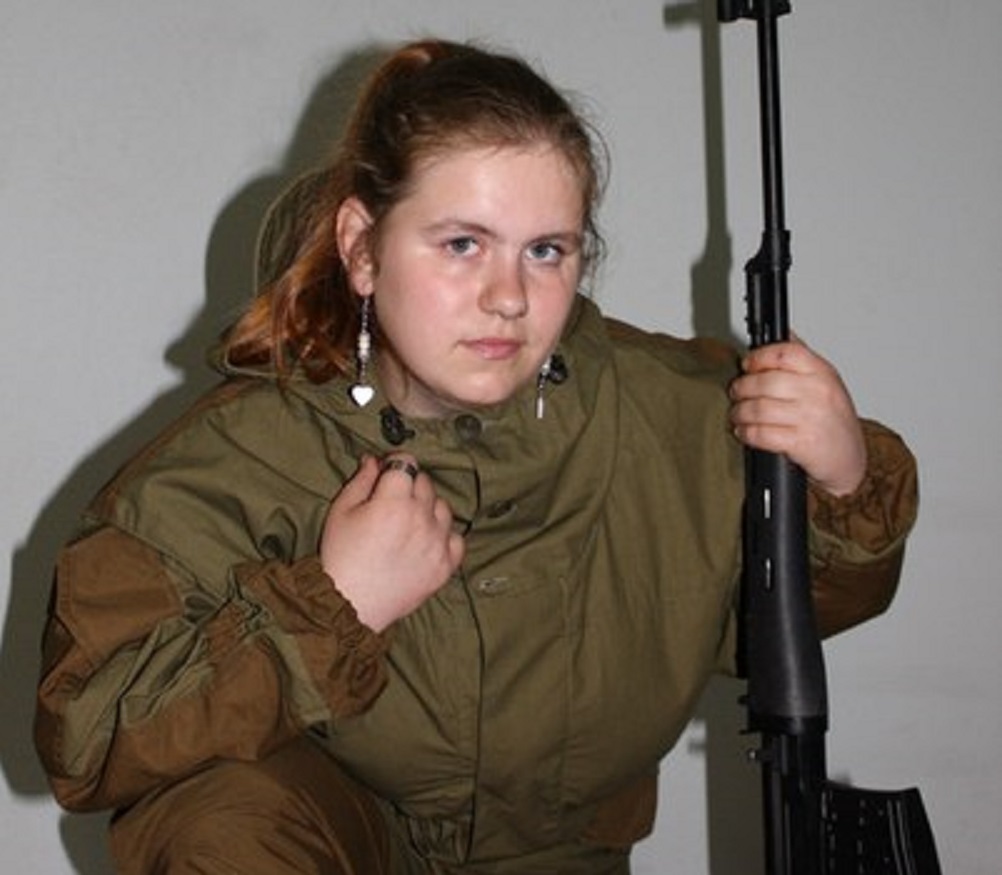
Ukrainian security detained Maria Koleda in
April alleging she shot three people during
protests in Ukraine. Koleda, a Russian citizen,
appears to have associated with Russian neo-
Nazis, according to her social media posts.
Russian president Vladimir Putin has increasingly embraced far-right and neo-Nazi groups in Russia and Europe to promote his policies at home and abroad, including efforts to disrupt Ukraine and divide Europe.

So said this report last week in Tablet, a U.S. Jewish current-affairs magazine.

Here are seven signs that Putin's Russia has taken a hard swerve to the far right.

1) Putin's New Friends -- Marie Le Pen & Co. 

Putin has closely allied himself with Europe's fast-growing far-right parties -- France's National Front, Hungary's Jobbik party, Greece's Golden Dawn and the Ataka party in Bulgaria, according to Tablet and this report in the journal Foreign Affairs.

Russia is thought to have funded some of the parties, says the Foreign Affairs report, written by Northeastern University political scientist Mitchell Orenstein.

Europe's far right, in turn, has defended Putin's invasion of Ukraine's Crimea peninsula and ultraconservative social policies such as his anti-gay legislation.

"I am very surprised that the European Union has now announced a kind of Cold War against Russia, which absolutely doesn't fit with the traditionally friendly relations between our countries," French National Front leader Marie Le Pen was quoted saying today during a visit to Moscow.

"Even the Soviet Union wasn't like this."
 - opposition leader Boris Nemtsov

Le Pen reportedly told the speaker of Russia's lower house Sergei Naryshkin she backed Russia's policies on Ukraine.

Le Pen has previously praised Putin. "As Vladimir Putin correctly stated, 20 years from now France will have become a colony of its former colonies," she was quoted telling Russian state television channel Rossia 1.

2) Putin Befriends U.S. Religious Right.

Putin also seems to be tight with segments of the U.S. religious right.

The World Congress of Families, an umbrella of the religious right, was apparently a key force behind Russia's anti-gay legislation, Mother Jones reported in February.

"We're convinced that Russia does and should play a very significant role in defence of the family and moral values worldwide," the group's executive director Larry Jacobs is quoted saying on its website.

The group's spokesman Don Feder wrote an article in March titled "Putin Doesn't Threaten Our National Security, Obama Does."

3) Far Right Invited to Monitor Crimea Referendum.

In March, Russian-appointed authorities in Crimea invited prominent European far-right and neo-Nazi leaders to act as observers in a jury-rigged referendum on joining Russia.

Despite widespread reports of fraud, the observers declared the vote was "open and transparent."

4) Russian State Media Stokes Anti-Semitism.

Anti-Semitism is on the rise in Russian state media, according to this BBC report citing the Russian Jewish Congress.

In one incident in February, Evelina Zakamskaya, a presenter on the state-owned Rossiya 24 news channel, was interviewing Aleksandr Prokhanov, a far-right author who openly blames Jewish people for Russia's problems.

Referring to Jewish people who joined protests against Ukraine's pro-Moscow then-president Viktor Yanukovych, Prokhanov said: "Don't they realize that with their own hands they are hastening a second Holocaust?"
Flag of Russian ultranationalist anti-migrant group
Other Russia. It and other far-right Russian groups
are active in pro-Russia protests in eastern
Ukraine, the Kyiv Post reports.

Zakamskaya replied: "They also hastened the first one."

The state-owned Russia Today news channel hinted last month that the loss of a Malaysian passenger jet in the ocean in March could have been the fault of British billionaire Jacob Rothschild, who the story noted is Jewish and is now the sole holder of a valuable semiconductor patent.

The European Jewish Congress said the article "peddles (an) anti-Semitic theory."

5) Putin's Anti-Semitic Remark.

Putin himself was accused of anti-Semitism over a remark he made last year at Moscow's Jewish Museum and Tolerance Center.

Putin claimed 80 to 85 percent of the first Soviet government was Jewish, which this Jewish Press item noted is false (only one of the 16 commissars was Jewish), calling the remark anti-Semitic.

6) Kremlin Backs Neo-Nazis at Home.

Putin's security services have supported Russia's neo-Nazi groups, according to this open letter to Putin from Ukrainian Jewish leaders.

The letter, published in March in The New York Times and other newspapers, dismissed Putin's claims that Ukraine's new pro-Western government is anti-Semitic.

"It seems you have confused Ukraine with Russia, where Jewish organizations have noticed growth in anti-Semitic tendencies last year," the letter said.

A Kremlin-backed youth movement called Nashi (Russian for "ours") has actively recruited Russian far-right skinheads from groups active in attacks on protesters, environmentalists and even rival extremists, this Financial Times story reported.

The story said the Russian government also appears to have repeatedly given "lenient treatment" to a skinhead group called Russian Image, which this Foreign Policy report said is "a neo-Nazi outfit" linked to several murders.

"Freedom evaporates with a clap of hands."
- Tatyana Lokshina of Human Rights Watch

Rights groups have also accused Russian authorities and state media of stoking anti-migrant fears and xenophobia and depicting migrants as criminals.

In one incident last October, police arrested 1,200 migrant workers -- mostly Muslims from the Caucasus and Asia -- at a warehouse that had been attacked by ultranationalist groups earlier that day.`

"Authorities are going after the victims, which seems completely absurd," said a Human Rights Watch official.

At the same time, Russia's media, increasingly under the Kremlin's tight control, has cranked up its ultranationalistic rhetoric during the conflict with Ukraine.

After Putin in March denounced domestic critics as "traitors" and a "fifth column," Russia closed down opposition websites and blogs, this Foreign Policy article said.

The article said Russia's growing nationalist fervour is silencing critics. "Freedom evaporates with a clap of hands," Tatyana Lokshina, director of the Moscow branch of Human Rights Watch, was quoted saying.

"Even the Soviet Union wasn't like this," opposition leader Boris Nemtsov is quoted writing in this New York Times story yesterday on Russia's "xenophobic chill."

"March 2014 marks a turn in the country from authoritarianism to dictatorship," he said.

One of the biggest backers of Putin's invasion of Crimea has been far-right leader Vladimir Zhirinovsky, the openly anti-Semitic deputy speaker of Russia's lower house. He has called for Russia to annex much of Ukraine.

7) Russian Far Right Active in Ukraine Unrest.

A number of far-right Russian activists have also turned up in Ukraine participating in pro-Russia protests, seemingly as part of the Kremlin's strategy of using provocateurs and crime gangs to destabilize Ukraine.

In March, Ukrainian security forces detained Oleg Bakhtiyarov, leader of the far-right Eurasian Youth Union of Russia, for allegedly planning an armed attack on Ukraine's parliament and government offices.

Bakhtiyarov reportedly recruited 200 people for the attack, promising them $500 apiece. He was apparently working with Russian TV channels to arrange for coverage of the raid, the Kyiv Post reported.

In April, Ukraine detained Maria Koleda, another Russian citizen, for allegedly shooting three people during protests in the southern region of Mykolaiv.

She reportedly participated in anti-Ukraine protests and had a pistol when she was detained. Her social media posts suggest she associated with Russian neo-Nazis and hard-right nationalists.

Ukraine has also detained Pavel Gubarev, a pro-Russian far-right activist who proclaimed himself the "people's governor" of the eastern Ukrainian city of Donetsk.

This BuzzFeed story says Russian neo-Nazi and far-right groups have sent members to Ukraine to stoke unrest.

One group, the Russian People's National Socialist Initiative, reportedly posted footage of members receiving military training before heading to Ukraine.

The article quotes Russian ultranationalist ideologue Alexander Dugin, who is close to Putin, advising pro-Russian activists in Ukraine "not to find a common language with the new authorities in Kyiv but rather (to) act radically."

Members of two other Russian extremist anti-migrant groups, Moscow Shield and Other Russia, have also been active in the pro-Russia protests in Ukraine, this Kyiv Post story said Thursday.

See also:
4 Myths About the Ukraine Crisis, Crimea and NATO
7 Reasons Why Crimea Results Aren't Credible -- and Why Media Coverage Stinks

Wednesday, March 26, 2014

4 Myths About the Ukraine Crisis, Crimea and NATO (Updated)

Truth is one of the first victims of war. The Russian "hybrid war" on Ukraine is no different.

Here are four common myths about the crisis in Ukraine propagated by the Kremlin and its backers in the West.

Myth #1
Russia's invasion of Crimea was a logical reaction to a U.S. and European plot to expand NATO. Part of the plot was overthrowing Ukraine's pro-Moscow president and installing a new pro-NATO government.

This commonly made claim may make sense if Ukraine's new government actually wanted to join NATO.

In fact, the new government isn't interested in NATO, Ukrainian foreign minister Andriy Deshchytsia told Vienna daily Die Presse Saturday.

"The Finnish model (of non-alignment) is an option for Ukraine: neighbour of Russia, member of the EU but not a member of NATO," he said.

U.S. president Barack Obama, for his part, also said today NATO isn't planning to admit Ukraine as a member, a situation he said won't change any time soon, reports state broadcaster Russia Today.

NATO previously rejected Ukraine for membership in 2008.

Meanwhile, in Russia, many don't agree that intervention in Ukraine was the logical reaction to events there.

In a survey in February, only 15 percent of Russians agreed Moscow should intervene in Ukraine to help pro-Russian president Viktor Yanukovych stay in power, according to the Kremlin's own pollster.

Seventy-three percent disagreed with intervention in what they believed was an internal matter for Ukrainians.

In mid-March, tens of thousands of Russians marched in Moscow to protest the Crimea invasion.

UPDATE (Nov. 30, 2014): Despite months of covert Russian military intervention in eastern Ukraine, a majority of Ukrainians shifted to supporting NATO accession only in August after the downing of Malaysia Airlines flight MH17 -- by all evidence, with a Russian-supplied anti-aircraft missile operated by Moscow-backed militants -- and then a full-scale invasion by units of Russia's regular army involving thousands of troops.

A new Ukrainian Parliament elected in October has as a result pledged to put Ukraine on the road to joining NATO. Pro-NATO sentiment in Ukraine thus followed Russia's actions. It didn't predate them.

Myth #2
"Washington spent $5 billion of U.S. taxpayer dollars engineering a coup in Ukraine."

This claim, made in the progressive publication Counterpunch in February, has also showed up in this item from state broadcaster Russia Today and on conspiracy sites.

The claim is based on a distortion of Dec. 2013 comments by U.S. diplomat Victoria Nuland.

What Nuland actually said was that the U.S. had given Ukraine $5 billion in aid since Ukraine's independence from the Soviet Union in 1991.

"The money in question was spent over more than 20 years," said this article debunking the claim in the Tamba Bay Times' Pulitzer Prize-winning PolitiFact column.

"Yanukovych was elected in 2010. So any connection between the protests and the $5 billion is inaccurate."

The mass protests in Ukraine that swept Yanukovych out of power in February started only last November.

As well, the bulk of the aid appears to have gone to the Ukrainian government for such things as border security and nuclear non-proliferation -- not NGOs.

In fact, given the astonishing corruption of Yanukovych's regime, a good part of the U.S. aid since 2010 likely wound up in his pockets or those of his cronies.

Fun fact: The U.S. has also given Russia $17.8 billion in economic and military aid since 1991 -- more than triple what Ukraine got -- according to data from the U.S. Agency for International Development.

As for the mass protests that overthrew Yanukovych, even Russian president Vladimir Putin has said Yanukovych's corruption was the key motivation for the protests.

"Generally, people wanted change," he said in a press conference after he invaded Crimea in late February. He didn't mention NATO once.

A December survey of participants in the protests found that their three main motivations were police brutality, Yanukovych's refusal to sign an agreement on association with the European Union and a "desire to change life in Ukraine."

Their main demands were new elections and release of arrested protesters. Again, no mention of NATO.

Ninety-two percent said they didn't belong to any party or civic organization.

Myth #3
Ukraine's new leaders are anti-Semitic Nazis.

Putin and other Russian officials frequently accuse Ukraine's new government of being anti-Semitic Russophobes to justify the invasion of Crimea.

Some commentators in the West have parroted these claims, calling Kyiv's new authorities "Nazis."

While some far-right elements were indeed present among the hundreds of thousands whose protests swept Yanukovych out of power, Ukrainian Jewish leaders have dismissed the anti-Semitism claims.

In an open letter to Putin in March, over 200 prominent Ukrainian Jewish figures denounced his invasion of Crimea and said anti-Semitism is more of a problem in Russia than Ukraine.

They said Ukraine's new cabinet includes several minority members, including a Jewish deputy prime minister, two ethnic Russians and an Armenian.

"We do not wish to be 'defended' by sundering Ukraine and annexing its territory," they said. "We decisively call for you not to intervene in internal Ukrainian affairs, to return Russian armed forces to their normal fixed peacetime location and to stop encouraging pro-Russian separatism.

"Our very few nationalists (in Ukraine) are well controlled by civil society and the new Ukrainian government -- which is more than can be said for the Russian neo-Nazis, who are encouraged by your security services."

A series of articles on the website of the Association of Jewish Organizations and Communities of Ukraine -- the country's largest Jewish umbrella group -- says anti-Semitism wasn't a problem in the anti-Yanukovych protests and that Jewish activists played prominent roles on the barricades.

See more Jewish perspectives on the protests here and more analysis debunking Putin's claims here and here from Yale historian Timothy Snyder, a member of the U.S. Holocaust Memorial Museum's committee on conscience.

As for Russophobia, 26 percent of participants in the anti-Yanukovych protests said in a survey they spoke Russian at home. Another 19 percent spoke both Russian and Ukrainian.

Meanwhile, Putin himself came under fire last year for making anti-Semitic remarks at Moscow's Jewish Museum and Tolerance Center.

Putin has also increasingly aligned himself with Russia's own far right (see also here), which has strongly backed his Crimea invasion and other policies, such as his anti-gay legislation.

UPDATE (Nov. 30, 2014): Ukraine's pro-democracy movement has been inaccurately depicted as "fascist" by the Kremlin and its supporters in the West, writes Anton Shekhovtsov, a University College London researcher specializing in Europe's far right who edits the "Explorations of the Far Right" book series.

Ironically, the propaganda masks the Kremlin's own links with European fascist groups, he says. "The large network consisting of pro-Russian authors and institutions is a hard/extreme right breeding-ground of all kinds of conspiracy theories, Euroscepticism, racism and anti-democratic theories."

Since Russia began its covert war in Ukraine last spring, Russian state media and Kremlin-backed militants in Ukraine have stepped up anti-Semitic rhetoric and xenophobia, while Moscow has forged closer ties with Europe's far right. 

In late November, a Kremlin-linked Russian bank loaned France's far-right National Front 9 million euros amid more revelations about Moscow's links with far-right political parties across Europe that support Putin's foreign policy in Ukraine and anti-gay stance at home.

Myth #4
Crimea is historically Russian and shouldn't be part of Ukraine anyway.

Crimea is historically the homeland of the Crimean Tatar people, not Russians.

Tatars and their Mongol allies controlled Crimea for more than five centuries from the 1230s until Russia invaded in 1783.

Prior to the 1230s, much of it had belonged to Kyivan Rus' (the predecessor of modern-day Ukraine) for over 200 years.

After the Russian invasion in 1783, Tatars became a minority due to a policy of Russification and Soviet leader Joseph Stalin's mass deportation of the entire Tatar population to Siberia and the Far East after World War II. Half of Tatars died in the deportation.

Today, many Tatars have returned to their land, and they now make up 12 percent of Crimea's population.

Their leaders strongly back staying in Ukraine and say 99 percent of their people boycotted the fraud-riddled March 16 Crimean referendum on accession to Russia, which they considered illegitimate.

Alarm has increased since Tatar rights activist Reshat Ametov, a father of three, was found dead in mid-March with signs of torture after he was kidnapped by men in military uniforms.

Tatar leaders announced yesterday they are considering holding their own referendum on whether to be part of Ukraine or Russia.

"Nobody asked us, the Crimean Tatars... in what conditions we want to live," Tatar official Renat Chubarov said.

UPDATE (Nov. 30, 2014): The Russian president's own human rights council has rejected the results of the Crimean referendum on joining Russia in March.

The body said in a report in May that only 50 to 60 percent of Crimea residents supported accession to Russia (not 97 percent as claimed officially) and that turnout was only 30 to 50 percent (not 83 percent as claimed officially). 

In other words, only 15 to 30 percent of eligible voters backed joining Russia -- even less than in recent surveys, which generally showed 40 to 45-percent support for the idea.

In another survey in September by an institute close to local Moscow-backed authorities, only 27 percent of residents of Simferopol, Crimea's administrative centre, said they consider themselves as Russian citizens.

Since the Russian takeover, the human rights situation for Crimean Tatars and Ukrainians in Crimea has deteriorated gravely, the United Nations and human rights groups have reported.

UPDATE (Jan. 25, 2015): Former militant commander Igor "Strelkov" Girkin, who says he was a colonel in Russia's FSB intelligence agency, acknowledges on Russian TV that Moscow-backed militants in Ukraine's Crimea peninsula forcibly gathered regional deputies to stage a fraud-riddled referendum on joining Russia last March.

"I did not see any support from (Crimea) state authorities in Simferopol (the regional capital)," he says. "It was the militants who gathered the deputies so they would accept this (the referendum)." (See an English account of Girkin's remarks here.)